Hai bisogno di ulteriori informazioni?
Littelfuse JLLS500
- JLLS Series
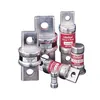
Descrizione del prodotto
The JLLS500 - JLLS Series features a space-saving design, making it the smallest fuse option for applications requiring ratings above 30 amperes, with dimensions less than one-third that of comparable Class R fuses. When utilized in accordance with the NEC, these Class T fuses deliver swift overload and short circuit protection specifically tailored for non-inductive circuits and equipment.
In scenarios where inductive circuits are involved, an increase in the ampere rating is recommended to prevent premature opening due to inrush currents. In such cases, the Class T fuses may solely offer short circuit protection. For motor and general-purpose circuits where spatial constraints are less of a concern, alternative options such as the POWR-PRO™ JTD_ID Indicator series or LLNRK/LLSRK series may be suggested.
With an ampere rating of 500A, these fuses operate at a voltage of 600VAC and 300VDC, featuring a fast-acting opening mechanism and an interrupting rating of 20000A at 300VDC. The package size is designed for knife-blade or bolt-in installations.
Hai bisogno di ulteriori informazioni?
- Ottenete termini di pagamento fino a 90 giorni da 500+ fornitori.
- Sconti sulla rivendita fino al 40%!
Specifiche tecniche
- Marchio
- Littelfuse
- Ampere Rating (A)
- 500
- VAC (V)
- 600
- VDC (V)
- 300
- Interrupting Rating
- 20000A@300VDC
- Opening
- Fast-Acting (F)
- Package Size
- Knife-Blade/Bolt-In
Documenti
Scheda tecnica
Scheda tecnica per Littelfuse JLLS500, incluse specifiche e caratteristiche.

Modelli CAD
Modello CAD 3D e disegni tecnici, pronti per il tuo software di progettazione.

Analisi di mercato per JLLS500
Ottieni dati analitici e di mercato in tempo reale su JLLS500 e altri prodotti della categoria Interruttori automatici e fusibili per ottimizzare le decisioni di acquisto.
- Dati sulla disponibilità di magazzino in tempo reale da oltre 700 distributori MRO in Europa e negli Stati Uniti.
- Analisi dei prezzi per condizione (nuovo, usato, ricondizionato) con prezzi mediani di mercato
- Monitoraggio della disponibilità dei componenti critici per prevenire i tempi di inattività della produzione