Benötigen Sie weitere Informationen?
FAG 7210 BTVPUA
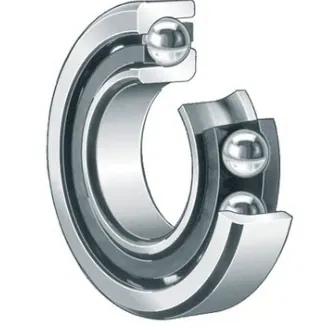
FAG 7210-B-TVP-UA Angular Contact Bearing
Produktbeschreibung
The FAG 7210-B-TVP-UA Angular Contact Bearing is designed for high precision and reliability in demanding applications. With a bore diameter of 50 mm and an outside diameter of 90 mm, this bearing is ideal for applications requiring high radial and axial load capacities. The bearing features a 40° contact angle, providing optimal performance in high-speed and high-load scenarios.
Constructed with a polyamide cage and an open design, the 7210-B-TVP-UA ensures efficient operation and easy maintenance. The bearing meets DIN 628-1 standards and has a precision rating of ABEC 1 (ISO Class Normal), ensuring consistent and reliable performance. With a maximum operating temperature of +120°C and a maximum rotational speed of 9300 rpm, this bearing is suitable for a wide range of industrial applications.
Whether used in machinery, automotive, or other industrial equipment, the FAG 7210-B-TVP-UA Angular Contact Bearing delivers exceptional performance and durability.
Benötigen Sie weitere Informationen?
- Erhalten Sie bis zu 90 Tage Zahlungsziele von 500+ Lieferanten
- Wiederverkaufsrabatte bis zu 40%!
Spezifikationen
- Marke
- FAG
- Fillet Radius
- 1 mm
- Contact Angle
- 40 °
- Radial Dynamic Load Capacity
- 39000 N
- Radial Static Load Capacity
- 28500 N
- Max RPM
- 9300 rpm
- Cage Material
- Polyamide
Dokumente
Datenblatt
Datenblatt für FAG 7210 BTVPUA, einschließlich Spezifikationen und Funktionen.

CAD-Modelle
3D-CAD-Modell und technische Zeichnungen, bereit für Ihre Konstruktionssoftware.
Verwandte Produkte




Markteinblicke für 7210 BTVPUA
Erhalten Sie Echtzeit-Analysen und Marktdaten zu 7210 BTVPUA und weiteren Produkten aus der Kategorie Kugel- & Rollenlager, um Ihre Kaufentscheidungen zu optimieren.
- Echtzeit-Verfügbarkeitsdaten von über 700 MRO-Händlern in Europa und den USA
- Preisanalyse nach Zustand (neu, gebraucht, überholt) mit Marktmedianpreisen
- Überwachung der Verfügbarkeit kritischer Komponenten zur Vermeidung von Produktionsausfällen