Benötigen Sie weitere Informationen?
Siemens US2:MKN4040V1200SE
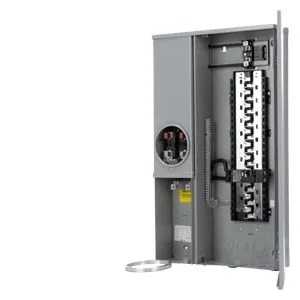
Siemens Photovoltaic Load Center 200A
Produktbeschreibung
The Siemens low voltage meter load center combination is designed for photovoltaic and other electrical distribution applications where compact integration and dependable service are required. Built as a 1-phase, 4-jaw meter system rated at 200A, it supports efficient power distribution in a streamlined enclosure suited for technical installations.
This unit provides 40 interior spaces with allowance for up to 40 circuits, helping integrators plan branch circuit layout with flexibility. The design includes OH/UG feed capability, a ring type cover, and surface mounting for installation versatility. It is intended for modern solar-oriented electrical systems where reliable load center and metering integration are important.
Product lifecycle information indicates the item is obsolete as of April 2026. For continued service planning, Siemens references a functional replacement and support options for spare part delivery, repair, or exchange through service channels.
Benötigen Sie weitere Informationen?
- Erhalten Sie bis zu 90 Tage Zahlungsziele von 500+ Lieferanten
- Wiederverkaufsrabatte bis zu 40%!
Spezifikationen
- Marke
- Siemens
- Product Type
- Low voltage meter load center combination
- Application
- Photovoltaic load center
- Product Family
- 5187
- Catalog ID
- LV10.1
- Group Code
- P320
- System Type
- 1-phase
Dokumente
Datenblatt
Datenblatt für Siemens US2:MKN4040V1200SE, einschließlich Spezifikationen und Funktionen.

CAD-Modelle
3D-CAD-Modell und technische Zeichnungen, bereit für Ihre Konstruktionssoftware.

Markteinblicke für US2:MKN4040V1200SE
Erhalten Sie Echtzeit-Analysen und Marktdaten zu US2:MKN4040V1200SE und ähnlichen Produkten, um Ihre Kaufentscheidungen zu optimieren.
- Echtzeit-Verfügbarkeitsdaten von über 700 MRO-Händlern in Europa und den USA
- Preisanalyse nach Zustand (neu, gebraucht, überholt) mit Marktmedianpreisen
- Überwachung der Verfügbarkeit kritischer Komponenten zur Vermeidung von Produktionsausfällen