OEM vs Aftermarket Industrial Parts: A 2026 Guide

A production line is down, the replacement PLC has a 20-week lead time from the OEM, and the buyer needs a verified alternative today. That scenario drives most decisions about OEM vs aftermarket parts, but it shouldn't be the only factor. In this guide from Automa.Net, we break down how to weigh reliability, cost, and availability when choosing between OEM and aftermarket industrial parts, so you can make a defensible call before a machine goes dark.
The stakes are real. Aftermarket components can deliver cost savings of 30-50% versus OEM equivalents, according to BusCMMS cost analysis, yet OEM parts still set the benchmark for reliability with a 3-4% failure rate. The decision isn't about finding the "best" part in the abstract. It is about matching the component to the application, the machine's criticality, and your tolerance for risk.
What Are OEM and Aftermarket Parts?
Original Equipment Manufacturer (OEM) Components
OEM components match your BOM exactly and carry the manufacturer's engineering guarantee. The trade-off is cost and speed: OEM supply chains for legacy parts are slow, and the price premium is significant. A 15-year-old machine may face lead times that make the part effectively unavailable.
Aftermarket and Third-Party Alternatives
Aftermarket alternatives are produced by independent manufacturers who reverse-engineer or license the design. The quality spectrum is broad: some aftermarket components meet or exceed OEM specifications with certifications like IATF 16949, while others are built to a lower standard for cost-sensitive buyers.
The market is shifting toward premium aftermarket options. Installers increasingly prioritize OE-level quality and clear value over generic low-cost parts, as reported by AftermarketNews manufacturer insights. That trend matters because it means the gap between OEM and quality aftermarket is narrowing, giving procurement teams more viable options.
Key Differences Between OEM and Aftermarket Parts
| Factor | OEM Parts | Aftermarket Parts | Refurbished/Surplus |
| Quality assurance | Built to original specs | Varies by manufacturer | Tested to working condition |
| Lead time | Can be long for legacy | Usually shorter | Immediate if in stock |
| Cost | Highest | 30-50% lower typically | Lowest upfront |
| Warranty | Full OEM warranty | Varies by brand | Limited or none |
| Best for | Critical, safety-rated | Routine replacement | Obsolete components |
Quality Assurance and Standards
OEM parts exhibit a 3-4% failure rate. Certified aftermarket suppliers building to IATF 16949 can perform indistinguishably from OEM. Generic parts without certification may fail faster, driving up total cost through repeated labor and downtime.
Supply Chain and Lead Times
OEM supply chains are optimized for current production, not legacy support. Aftermarket manufacturers fill that gap by producing compatible components on demand. For unplanned failures, a verified aftermarket part available in days beats an OEM part available in months.
Refurbished vs Aftermarket Industrial Parts: Which Fits Your Needs?
Refurbished parts are tested originals; aftermarket parts are new third-party components. Choose refurbished for obsolete equipment where no new alternative exists, a refurbished servo drive maintains exact electrical and mechanical characteristics. Choose aftermarket for standard components like bearings and sensors. For complex electronics like PLCs or HMIs, the failure risk of an unproven aftermarket design often outweighs cost savings.
Cost Comparison and Total Cost of Ownership
The real metric is total cost of ownership, which includes part price, installation labor, downtime cost, and expected service life.
Upfront Savings and Long-Term Value
Aftermarket parts can offer cost savings of 30-50% compared to OEM alternatives, per the BusCMMS analysis. That is a substantial figure on a high-value drive or controller. But the savings only materialize if the part performs to spec for its full service life.
Here is the mechanism that matters: a cheap aftermarket part that fails after six months costs more than an OEM part that runs for five years, once you factor in the second installation and the production loss. For non-critical components with predictable duty cycles, the aftermarket savings are real. For critical equipment running continuously, the reliability premium is usually worth paying.
Calculating True Cost of Ownership
TCO includes part price, labor, downtime, collateral damage, and opportunity cost. A single early failure can wipe out years of savings. The question is: what is the probability that your aftermarket part will fail early, and what is your tolerance for that risk?
Warranty Coverage and Risk Transfer
Warranty coverage transfers risk. OEM parts come with manufacturer protection; aftermarket warranties vary, and refurbished parts often carry only 30-90 days. An OEM failure is the manufacturer's responsibility; an aftermarket failure may leave you liable for collateral damage. For critical equipment, request at least 12 months warranty from the aftermarket supplier. If they will not offer it, that signals they do not stand behind the part's reliability.
When Aftermarket TCO Wins
Aftermarket parts deliver the best TCO for routine, non-critical replacement (bearings, seals, fans, filters); obsolete equipment with no OEM option; high-volume, low-criticality components; and planned maintenance with spare stock.
When OEM TCO Wins
OEM parts deliver the best TCO for single points of failure on critical equipment; safety-rated components; integrated systems with firmware or calibration; and equipment under warranty or service contract. Calculate TCO for every critical part, not just price.
Managing Machine Downtime: OEM Reliability vs Aftermarket Availability
Machine downtime is the most expensive problem in manufacturing, and it changes the OEM vs aftermarket calculation entirely. When a line is stopped, the cost of the part becomes secondary to the cost of every idle minute.
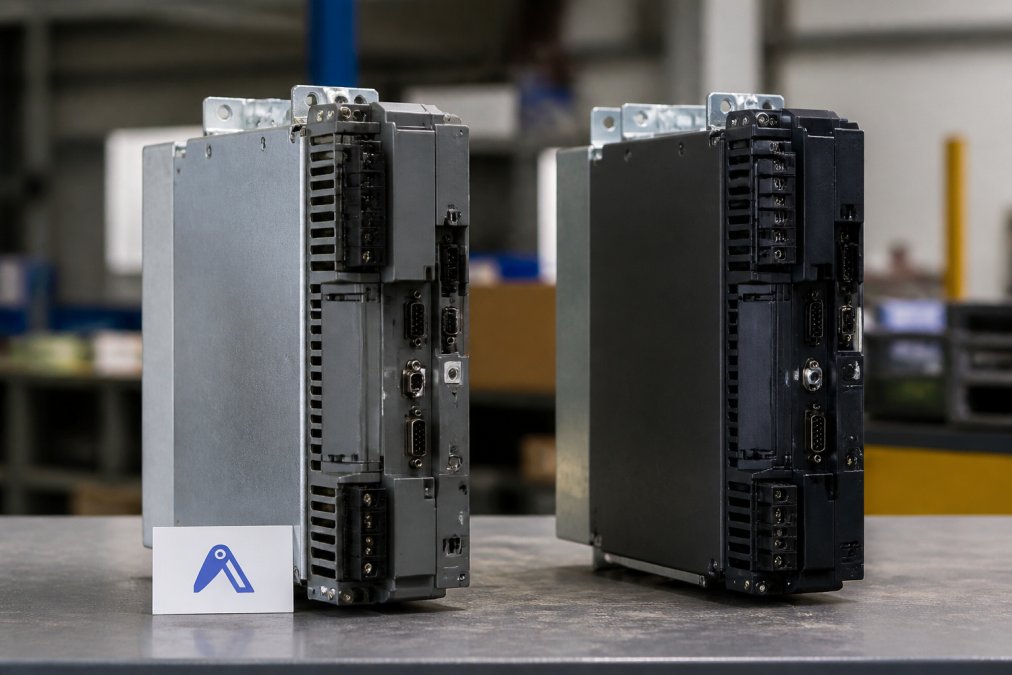
OEM reliability is the safest bet for planned maintenance. You order ahead, stock the part, and replace it on schedule. Aftermarket availability wins for unplanned failures, especially on legacy equipment. When the OEM part is discontinued or has a 20-week lead time, a verified aftermarket or surplus part can bring the line back in days.
The global automotive aftermarket industry is projected to grow from USD 509.8 billion in 2026 to USD 643.8 billion by 2033, according to Grand View Research market report. That growth is driven in part by aging equipment that needs replacement parts faster than OEMs can supply them.
Find it on Automa.Net →
The operational reality is that you need both sources. Stock OEM parts for your critical, high-failure components. Keep aftermarket and surplus sources vetted and ready for the unexpected breakdown.
Compatibility, Fitment, and Regulatory Compliance
Technical Specifications and Equipment Longevity
Compare the full technical specification against your OEM part number: communication protocol, firmware version, encoder resolution, and mounting dimensions. A part that is 90% compatible can still cause problems. An aftermarket motor with different torque can strain a gearbox; an aftermarket PLC with different cycle time can cause timing faults. Request the datasheet and compare it line by line.
Common compatibility traps: communication protocol mismatch (Modbus vs PROFIBUS), encoder resolution (2048 PPR vs 1024 PPR), mounting footprint, firmware behavior (scan cycle), and connector type (M12 vs DIN 43650). Before you order, ask the supplier: "Can you confirm this part is a drop-in replacement for [OEM part number] in [your machine model]?" If they hesitate, keep looking.
Safety Standards and Certification
Regulatory compliance is non-negotiable for safety-rated components. In the European market, parts used in safety functions must meet applicable machinery directives and carry CE marking. An aftermarket part without the right certification can void your machine's compliance. Safety-rated parts include emergency stop circuits (EN 60204-1), pressure relief valves (EN 764-1), interlocked guards (EN 953), control systems for hazardous motion (EN 61508 or EN 62061), and pneumatic/hydraulic components in safety circuits (EN 4413 or EN 4414).
If a part is part of a safety function, the aftermarket supplier must provide: CE declaration of conformity, technical file showing safety rating (SIL 2, PLd, Category 3), test certificates from a notified body, and compatibility statement. Do not accept a verbal assurance or generic "CE marked" label. A supplier who cannot or will not provide documentation is a risk you should not take.
Machine Certification and Warranty Implications
Using an uncertified aftermarket part in a safety function can void your machine's CE marking and liability insurance. If your machine is under OEM warranty, using an aftermarket part can void the warranty. If your machine is subject to periodic inspection, the inspector may reject uncertified aftermarket parts.
Verification Checklist for Aftermarket Parts
Before you purchase an aftermarket part, verify: datasheet matches your OEM part number; safety certification (if applicable); compatibility statement in writing; warranty terms (minimum 12 months for critical parts); OEM warranty impact; test certificates for high-risk components; and supplier reputation. If the supplier cannot or will not provide this documentation, move on to the next option.
OEM vs Aftermarket: A Practical Decision Framework
Use this framework when a part request crosses your desk: (1) Classify the part's criticality. (2) Check OEM availability and lead time. (3) Assess the failure impact and downtime cost. (4) Evaluate aftermarket quality and certifications. (5) Calculate total cost. (6) Decide and document. For critical safety components, choose OEM or certified aftermarket with full documentation. For obsolete parts, source refurbished or verified surplus. For routine replacement, quality aftermarket delivers the best value.
Next Steps: Finding the Right Parts for Your Operation
The decision between OEM and aftermarket parts is an ongoing sourcing strategy that balances reliability, cost, and availability for every component in your plant. The key is having verified options ready before a machine fails. When you need to source a part, start with AutomaSEARCH on Automa.Net to cross-reference live inventory across a network of verified distributors and brokers. If the part is discontinued or you cannot find it listed, broadcast an RFQ through the Request Board and let the network find it for you.
Frequently Asked Questions
Is it better to get OEM parts or aftermarket parts for industrial automation equipment?
It depends on your operational priorities. OEM parts typically exhibit a 3-4% failure rate and carry manufacturer warranties, making them reliable for critical systems. Aftermarket components can deliver cost savings of 30-50% without significant quality loss in specific applications, according to BusCMMS (2026). Choose OEM when equipment downtime costs exceed the price premium; choose aftermarket when budget constraints and lead times are your primary concern. A documented maintenance history helps you evaluate which option has performed better in your specific environment.
What are the main disadvantages of OEM parts?
OEM parts carry a higher upfront cost and often involve longer lead times, particularly for legacy or discontinued components. Obsolescence risk is real: manufacturers eventually discontinue support for older equipment, leaving you dependent on remaining stock or refurbished inventory. For machines built 15+ years ago, OEM availability may force you toward aftermarket or refurbished alternatives regardless of preference.
How do refurbished and aftermarket industrial parts compare?
Refurbished parts are original components restored to working condition, often with partial warranties. Aftermarket parts are newly manufactured by third-party suppliers to match OEM specifications. Refurbished components typically cost less than OEM originals but more than new aftermarket alternatives, and they carry lower obsolescence risk for legacy equipment. Aftermarket parts offer the lowest upfront cost and fastest availability but require verification of compatibility and certification (such as IATF 1649). For discontinued equipment, refurbished parts are often your only viable option when OEM stock is exhausted.
What documentation should you request when sourcing aftermarket industrial components?
Always request technical specifications, compatibility matrices, and certification documentation (IATF 1649 or equivalent). Ask for failure rate data, warranty terms, and lead time commitments in writing. Verify that the supplier can provide traceability for critical components like PLCs, drives, and servo motors. Request references from other users of the same part in similar applications. For legacy Siemens, Allen-Bradley, or ABB hardware, confirm that the aftermarket supplier has tested the component against the original equipment's control logic and performance requirements.
Find it on Automa.Net →
Other Posts

How to Forecast Demand for Industrial MRO Supplies
Learn how to forecast demand for industrial MRO supplies despite intermittent, failure-driven needs. Apply a practical spare parts planning framework.
Read More →
7 Strategies for Reducing Industrial Maintenance and Repair Costs
Discover 7 strategies for reducing industrial maintenance and repair costs in 2026, from preventive planning to smarter spare parts sourcing.
Read More →
Optimize Industrial Spare Parts Inventory Levels in 2026
Learn to optimize industrial spare parts inventory with criticality analysis, demand forecasting, and strategies to cut MRO carrying costs.
Read More →