Need more information?
Schneider Electric LR9F5363
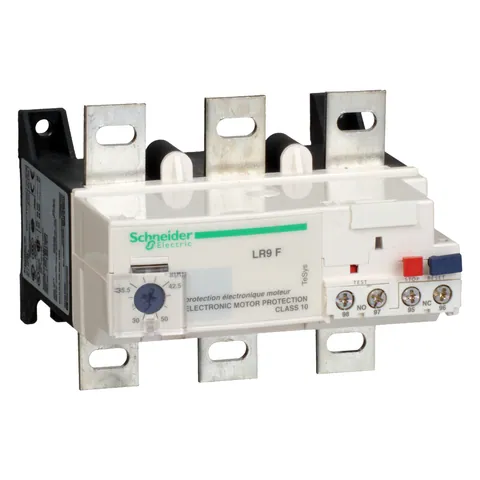
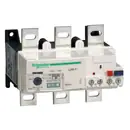
TeSys LRF - Electronic Thermal Overload Relay - 48-80A - Class 10


Product Description
The TeSys LRF electronic overload relay is designed for the protection of motors with a power range of 30-37kW at 400V. It offers a thermal setting range of 48-80A, class 10. This relay is intended to be mounted directly below a TeSys F 3-pole contactor (LC1 F115, F150, F185). For optimal installation, it's recommended to use a support mounting plate LA7F901 (to be ordered separately).
The relay provides protection against thermal overload of 1-phase and 3-phase motors, phase failure, phase unbalance, prolonged starting times, and stalled rotor conditions. On the front of the relay, you'll find a thermal adjustment dial, buttons for test, stop & reset, a trip indicator, and trip auxiliary contacts (1NO+1NC).
This product is multi-standard certified (IEC, UL, CSA, CCC, Marine) and complies with Green Premium standards (RoHs/Reach).
Offer details
- Best offer from:
 Trusted supplier — Romania, member since 2023, 1–4 employees
- Availability:
- 1 pc.On RequestUpdated at: 22-08-2026
- Condition:
- New Surplus
Specifications
- Brand
- Schneider Electric
- Network Type
- AC
- Thermal Protection Adjustment Range
- 48-80 A
- Relay Application
- motor protection
- Product Or Component Type
- electronic thermal overload relay
- Product Name
- TeSys LRF
- Thermal Overload Class
- class 10 IEC 60947-4
Access our platform to find more offers
Register now to explore 36 mln offers from verified suppliers worldwide.
- Compare offers globally
- Direct supplier contact
- RFQs, Quotes, and Orders
- BOM Search
Documents
Data Sheet
Datasheet for Schneider Electric LR9F5363, including specifications and features.
 TraceParts
CAD Models
3D CAD model and technical drawings, ready for your design software.
Related products
Market insights

Get real-time analytics and market data to optimize your purchasing decisions for this component and similar products
- Real-time stock availability data from 700 MRO distributors in Europe and USA
- Price analysis by condition (new, used, refurbished) with market median prices
- Critical component availability monitoring to prevent production downtime
- Inventory optimization insights based on market supply trends