Finding Hard-to-Find PLC Parts: A 2026 Sourcing Guide

Why Hard-to-Find PLC Parts Stop Production in 2026
A failed CPU module on a 2009 packaging line can halt output for weeks. The OEM has moved on, the distributor lists the part as discontinued, and the maintenance team has no drawing of the cabinet. Finding hard-to-find PLC parts is now a sourcing discipline, not a phone call. At Automa.Net, we see this daily: legacy equipment outlives its support window, and buyers need a verified replacement module today. Robotics & Automation News on obsolete PLC sourcing notes that supply-chain pressure, aging systems and reduced OEM support are making obsolete parts harder to source. Here is how we would work the problem, from nameplate to purchase order.
PLC Part Number Lookup: The Exact Identification Step
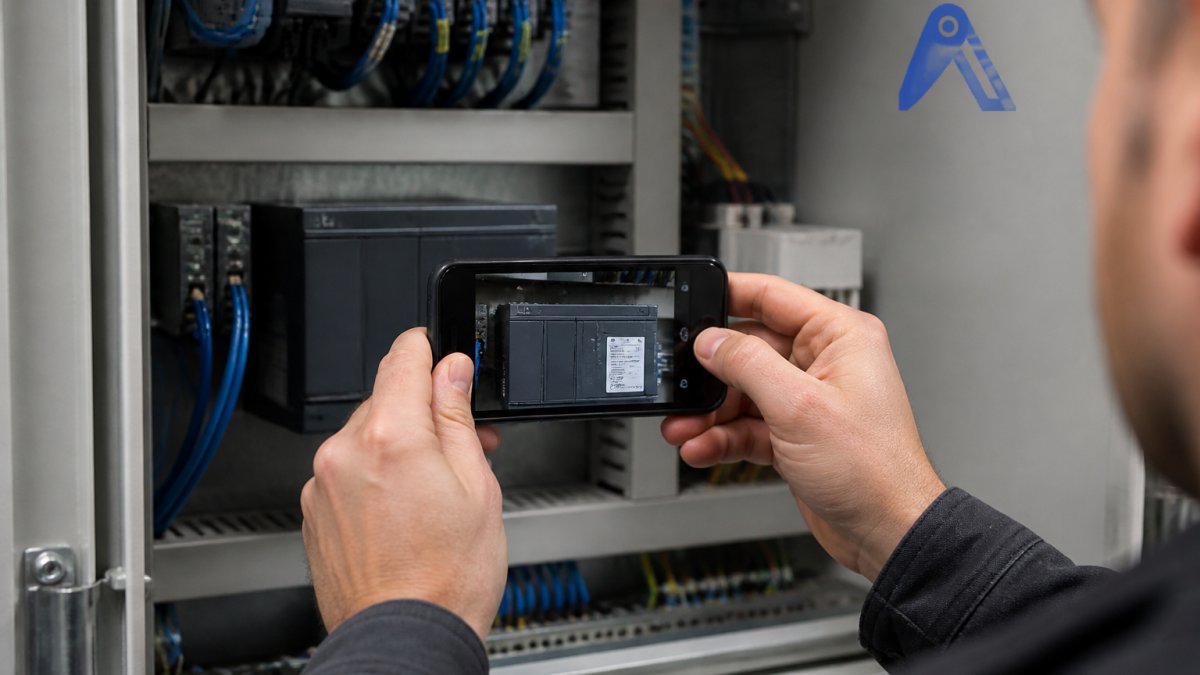
A PLC part number lookup starts with the full order number, not the series name. "S7-300" is not a part number. "6ES7315-2AH14-0AB0" is.
Where to Read the Nameplate and Which Fields Matter
Read the module label inside the cabinet, not the drawing. Capture these fields:
- Order number (Artikelnummer), complete with all suffixes
- Hardware and firmware revision
- Serial number and manufacturing date
- Rack position and slot
- Module type: CPU, I/O module, power supply, communication module, DCS card
Photograph every label. A revision suffix can decide compatibility, and a blurry photo of the wrong module wastes a week.
Sourcing Discontinued PLC Spare Parts Without Guesswork
Discontinued PLC spare parts require three search passes. Run them in order.
- Search the exact order number across distributor and broker inventory.
- Search the series and function, e.g. a 16-channel digital input module for the same rack.
- Search the superseded part number the OEM lists in its discontinuation notice.
Pass one finds exact stock. Pass two finds a functional match. Pass three finds the official successor, which may need a different wiring or firmware level. AutomaSEARCH runs the first pass across the whole network, so one query checks hundreds of supplier inventories instead of one.
Obsolete PLC Parts: Build a Verified Supplier Shortlist
Obsolete PLC parts come from sources with very different risk profiles, and the listing tells you almost nothing about which one you are dealing with. Vet each supplier against the same fixed set of checks before you send a purchase order, and score them the same way every time so a cheap offer cannot talk its way past your process.
The checks that separate a specialist from a reseller
- Traceability: can they tell you where the unit came from, decommissioned line, OEM overstock, or a repair workshop, and back it with a document?
- Stock status: is the part physically in hand, photographed, and ready to ship, or "available to order" against a supplier they have not confirmed?
- Test evidence: do they test before shipping, and will they send the test record with the unit rather than describe it on the phone?
- Revision and date code: will they confirm the exact revision suffix and date code in writing before you pay?
- Warranty terms: what is covered, for how long, and who pays return freight on a failed unit?
- Return terms: stated in writing, with the window and the condition the unit must be in?
- Payment protection: can you pay against an invoice with defined terms, or are you asked for an unprotected transfer?
- Trading history: a verifiable company record, a business address, and references from other maintenance or procurement teams.
A specialist who trades legacy automation hardware answers these in one email with attachments. A generalist answers two and deflects the rest.
Score the shortlist, do not rank it by price
Put every candidate on the same grid and mark each check pass, partial, or fail. Drop any supplier that fails traceability, test evidence, or written return terms, those three are the ones that turn a cheap module into a second line stop. Price only breaks ties between suppliers who pass the same checks.
When you cannot get a straight answer on traceability or test records, treat that as a fail, not a maybe. The cost of walking away is a phone call; the cost of a bad unit is a stopped line.
Refurbished PLC Parts vs New Surplus: What the Label Actually Means
The label decides the risk, so read it precisely.
| Option | What it is | Risk | Best for |
| New surplus | Unused, original packaging, often overstock | Shelf life, missing accessories | Critical spares, long-term stock |
| Reconditioned | Repaired and tested, new wear parts | Repair quality varies by workshop | Fast replacement of a failed module |
| Used pull | Removed from a decommissioned machine | Unknown runtime, no test record | Non-critical or trial use |
| OEM repair | Original manufacturer service | Lead time, cost | High-value modules still supported |
New surplus and refurbished PLC parts are not the same product. Treat the warranty and test record as part of the specification.
Compatibility and Substitution Validation Before You Order
A compatible module must match on five levels, not four: mechanical fit, electrical rating, firmware, communication, and configuration behaviour. Most substitution failures we see are not electrical, they are a module that fits and powers up but changes a diagnostic or default the existing program depends on.
Find it on Automa.Net →
Validate in this order, and stop at the first mismatch
- Mechanical: rack width, slot position, connector type and pinout, and whether the front connector or terminal block carries over. A module that needs a different connector is a wiring change, not a drop-in.
- Electrical: input voltage and range, current rating per channel, isolation between channels and backplane, and load type the outputs are rated for. Check derating at the cabinet ambient temperature, not at the datasheet's reference condition.
- Firmware: the minimum firmware the CPU expects, and whether the substitute reports a different firmware level to the program. A newer module can be rejected by an older CPU, or accepted but behave differently.
- Communication: bus protocol, address range, baud rate, and whether the substitute occupies the same address space. On a Profibus or Profinet segment, an address or device-name mismatch faults the whole segment, not just the module.
- Configuration behaviour: diagnostic defaults, substitute-value behaviour on channel failure, and any parameter the program reads back at startup. This is where bench testing earns its keep.
Test offline before the module goes into the cabinet
Where you have a bench rack, load the substitute with the existing program and watch startup diagnostics, not just I/O. A module that runs but trips a diagnostic the program treats as a fault will stop the line on the first cycle. If a bench rack is not available, compare the substitute's parameter list against the failed module's configuration line by line before installation.
When a substitute is not acceptable
Some substitutions should not be made at all, regardless of how close the match looks:
- Safety-related I/O and safety relays: a functional substitute is not a safety-rated one. Do not swap these without the original safety assessment.
- Modules carrying a certification the machine relies on: a substitute without the same certification changes the machine's compliance position.
- Any module where the program reads back a parameter the substitute does not support.
In those cases, repair of the original, a matched OEM successor with the documented migration step, or a temporary bypass under engineering sign-off is the safer route than a near-match. Document the substitution decision either way, so the next failure does not restart the investigation from zero.
Condition, Authenticity and Total Cost: A Buyer's Checklist
Total cost beats unit price. Run this checklist before approving any order.
- [ ] Order number, revision and date code match the request
- [ ] Stock photo shows the actual unit and its connectors
- [ ] Test record or warranty covers the failure mode
- [ ] Lead time fits the shutdown window
- [ ] Return terms are stated in writing
- [ ] Packaging and labels look original, not reprinted
On authenticity, ask for traceable documentation and buy from suppliers with a verifiable trading history. Cheap units with reprinted labels cost more once the line stops twice.
What to Put in an RFQ for an Obsolete PLC Module
A precise RFQ gets a precise answer. Include:
- Full order number and revision
- Quantity and required delivery date
- Photo of the nameplate
- Machine type and application
- Whether a functional substitute is acceptable
- Your testing and warranty requirements
The Request Board broadcasts that RFQ to suppliers holding the stock, so you compare real offers instead of chasing individual inboxes.
Frequently Asked Questions
Where can I find discontinued PLC parts?
Start with specialist industrial automation suppliers and parts marketplaces that list real, in-stock inventory rather than catalog pages. Search by the full part number and series, then confirm the revision. Surplus stock held by machine builders and other plants is often the fastest route for discontinued PLC spare parts, because the part already exists in the field. Ask for the nameplate photo, the revision, and the test record before you commit, and keep a second supplier as a fallback.
How do I identify the exact part number for an obsolete PLC?
Read the nameplate on the module itself, not the drawing or the BOM alone. Record the manufacturer, the full order number, the series, the revision or firmware level, and the hardware version. Photograph the label so the characters are unambiguous. A PLC part number lookup against the manufacturer's archive confirms the format, and comparing it with the BOM catches cases where a previous repair swapped in a different revision. Exact identification prevents ordering a module that fits the rack but not the firmware.
What should I verify before buying a refurbished PLC part?
Ask for the test record, not just a warranty statement. Confirm what was replaced, whether the firmware was updated, and how the module was tested under load. Check the revision against your existing system, because a refurbished PLC part with a different firmware level can fail to communicate with the rest of the rack. Request photos of the actual unit, including the nameplate and any repair marks, and confirm the return terms in writing before the order is placed.
How do I find a compatible replacement for a discontinued PLC module?
Use the manufacturer's migration or replacement documentation first, then validate against your own configuration. Compare the I/O count, signal type, backplane or bus compatibility, power requirements, and the programming environment version. A pin-compatible module is not automatically software-compatible. Where no exact replacement exists, a remote I/O block or a different series module may work, but only after you confirm the communication protocol and the engineering tool support. Document the substitution and test it offline before it goes into production.
When a module fails and the OEM lead time runs to 20 weeks, the line cannot wait. Automa.Net connects you to a verified network of suppliers listing real, in-stock obsolete and hard-to-find components, with AutomaSnap to identify a part from a nameplate photo and AutomaSEARCH to check live inventory across the network. Get started with Automa.Net and turn a discontinued part number into a confirmed replacement.
Find it on Automa.Net →
Other Posts

How to Clean Bills of Materials for Industrial Procurement
Learn how to clean bills of materials for industrial procurement.
Read More →
Industrial Component Quality Control Checklist: A 2026 Guide
Build a quality control checklist for industrial components.
Read More →
7 Tactics for Negotiating Bulk Pricing on Industrial Components
Master negotiating bulk pricing industrial components with supplier comparison tactics. Learn how to secure volume discounts and lock in better terms.
Read More →