Refurbished vs New Automation Components for MRO Spares

Evaluating refurbished vs new automation components comes down to the machine's remaining service life and the part's documented condition. Choose new for safety-critical, long-life assets, and refurbished for legacy lines with years left when test records and repair history are provided in writing.
- New parts carry the highest purchase cost but the lowest risk and full OEM warranty.
- Refurbished means a used original that was cleaned, inspected and had worn elements replaced.
- Surplus is unused stock from another holder, often with no warranty and unknown storage.
- Confirm exact part number, firmware version and written condition before any refurbished payment clears.
- A lower price on an undocumented unit is a downtime risk, not a saving.
Refurbished vs New Automation Components: What Actually Decides the Buy
Evaluating refurbished vs new automation components comes down to one question: what does the machine's remaining service life demand, and what does the part's documented condition prove. A sealed Siemens drive is not automatically the right buy for a line scheduled for replacement in eighteen months. A reconditioned unit with full test records often is.
Buyers often compare list prices and stop there. The real cost sits in downtime, installation risk and warranty gaps, not in the invoice line.
New means unused, in original packaging, with the manufacturer's full warranty. Refurbished means a used original component that has been cleaned, inspected, and had worn or damaged elements replaced, per the RECLAIM refurbishment and remanufacturing research definition. Surplus is unused stock someone else holds. Used is pulled from service with no reconditioning.
| Condition | Purchase cost | Warranty | Risk | Best for |
| New | Highest | Full OEM | Lowest | Safety-critical, long-life assets |
| Refurbished | Lower | Supplier-defined | Medium, documented | Legacy lines with years left |
| Surplus | Lower | Often none | Medium, unknown storage | Non-critical, verified stock |
| Used | Lowest | None | Highest | Breakdown cover only |
Transparency about refurbishment history reduces perceived risk and builds buyer confidence (Barkhi et al., 2024). Ask for it in writing.
EXTERNAL_LINK: Where to buy industrial automation parts and how to vet a supplier
New vs Refurbished PLC: Matching Condition to the Machine's Remaining Life
A refurbished PLC is the better buy when the machine has years of life left but the controller family is discontinued. A new PLC wins when the asset is safety-critical or the software environment demands current firmware.
The distinction between refurbished and used matters here. Refurbished parts are used originals that were cleaned, inspected and had worn elements replaced, which separates them from second-hand stock.
Where a refurbished unit is the right call, repair of the drives and HMIs already in service is often the cheaper first move. Our industrial electronics repair services cover exactly that route.
The Refurbished Automation Parts Inspection Checklist Before You Pay
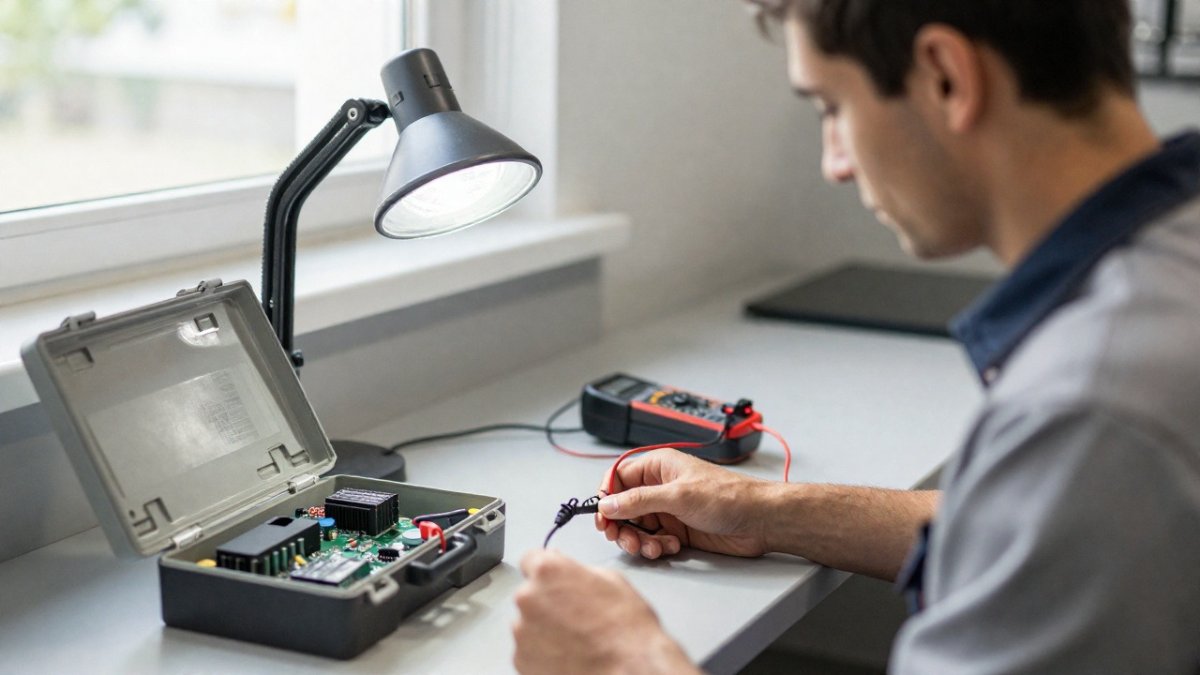
Run this checklist before any refurbished automation parts payment clears. It separates documented reconditioning from a cleaned-up second-hand unit.
- [ ] Exact part number and firmware version confirmed against your BOM
- [ ] Condition stated in writing: refurbished, surplus, or used
- [ ] Test records and fault analysis included
- [ ] Repair history: what was replaced, by whom
- [ ] Warranty terms and return terms in the quote
- [ ] Traceability to the original unit
- [ ] Compatibility check against the existing installation
A lower purchase cost on an undocumented unit is a downtime risk, not a saving.
Before committing, check what AutomaMRO costs and what the service covers. If you replace rather than recondition, surplus asset recovery turns the idle stock into working capital. When a discontinued part has no clear successor in your stores, AutomaSEARCH lets you look across verified suppliers for the exact part number before you settle for a substitute.
The buying decision is a data problem before it is a price problem. AutomaMRO reads your material master as it is, one export with no cleansing, and returns procurement price intelligence, a warehouse golden record with duplicates and successors mapped, and surplus recovery. Get started with Automa.Net and stop paying for parts you already own.
Frequently Asked Questions
Are refurbished automation components reliable?
They can be, when the refurbishment is a documented process rather than a clean-and-resell. Refurbished or reconditioned parts are used original components that have been cleaned, inspected and had worn or damaged elements replaced, which separates them from second-hand stock. Ask for test records, the repair history and the warranty terms in writing, then judge the offer on those documents rather than on the label alone.
What is the difference between refurbished and used automation parts?
Used or second-hand parts are sold as they came off the machine, with no work done between removal and resale. Refurbished and reconditioned parts have gone through an industrial process that restores the unit or its parts, including inspection and replacement of worn components. The two are not interchangeable categories, and a supplier that blurs them is telling you something about its condition grading.
What should an RFQ include for a refurbished part?
State the exact part number and the nameplate data, the condition you will accept (new, surplus, refurbished or used), the firmware or hardware revision the machine needs, and the warranty and traceability documents you expect with delivery. Add the application, because a drive running a safety function carries a different acceptance bar than one on a conveyor. A precise RFQ gets comparable offers instead of a price list.
Other Posts

Five Best Practices for MRO Spare Parts Procurement
Most MRO spare parts procurement problems start in the data, not the storeroom. Learn five practices that cut overpayment, duplicates and downtime.
Read More →
How to Track Slow-Moving Automation Parts Without Guesswork
Track slow-moving automation parts from one material master export. Identify dead stock, set KPIs, and decide retain, repair, transfer, or sell.
Read More →
Sparetech Alternative for Maintenance Teams: Sourcing Guide
Compare sparetech alternative options for obsolete automation parts. See how maintenance teams run RFQs and choose OEM, refurbished or surplus stock.
Read More →