How to Benefit from Legacy Schneider Electric Sensors

Legacy Schneider sensors deliver their main benefit by already fitting your control architecture, so you avoid re-engineering, re-commissioning and new spares. They pay off only when you can still source them and validate them, since support and spare parts end once equipment reaches end of service. Keeping them collapses the integration cost to zero and shrinks validation to a nameplate and pinout check.
- Check the electrical interface first: 24 V DC three-wire PNP versus NPN, and analogue 4-20 mA versus 0-10 V.
- Compare original and candidate ordering codes line by line on the datasheet, never by photograph.
- Buying on part number alone is the most common compatibility mistake when sourcing legacy parts.
- Test one unit in the actual panel before committing to a batch purchase.
- Confirm supplier return terms in writing before you buy any surplus unit.
Why Legacy Schneider Sensors Still Earn Their Place
A machine goes down, the sensor is discontinued, and the OEM quotes a 20-week lead time. That is the moment legacy Schneider sensors stop looking like old hardware and start looking like the cheapest uptime you have. For practical ways to keep that hardware running, see our guide on extending legacy industrial equipment lifespan.
The case for keeping legacy sensors rests on three things. First, they already fit. Second, they are already proven in your environment. Third, replacing them forces re-engineering, re-validation and new spares. Research from Alqoud et al., systematic review of legacy manufacturing describes digital retrofitting as an alternative to buying or building entirely new equipment, with waste reduction as a stated benefit.
Schneider Electric itself flags the other side. Once equipment reaches end of service, support ends, spare parts may disappear, and software updates stop (Schneider Electric lifecycle guidance). So the benefit is real, but it is conditional. Legacy sensors pay off when you can still source them and still validate them.
- Already integrated into the existing control architecture
- No re-engineering or re-commissioning project
- Proven reliability in your specific process conditions
A legacy sensor is only a safe asset if you have a second source for it. Plan for that before you commit.
Schneider Electric Sensor Compatibility with Modern Control Systems
Compatibility is where legacy plans quietly fail, and it fails at the revision level more often than at the family level. A legacy sensor may still work perfectly, but the signal path around it has moved on and the ordering code may have drifted.
The harder question is revision matching. Schneider Electric ordering codes carry suffixes that encode output stage, connector type, cable length and sometimes a design revision. A suffix change can mean a different output transistor or a changed sensing face, and a part that looks identical on the datasheet can behave differently in the panel.
Where a range has left active production, Schneider Electric's lifecycle guidance is the reference point: once equipment reaches end of service, support ends and software updates stop (Schneider Electric lifecycle guidance).
Engineering validation is an essential step in sourcing legacy parts. Maintenance can confirm the part fits and runs; engineering has to confirm the substitution is acceptable for the application. Build a short validation record for each legacy part so the approval is repeatable:
- Original ordering code and the candidate code side by side
- Output type, supply voltage and current draw compared against the input card spec
- Connector type and pinout verified against the panel drawing
- Mounting thread and sensing distance confirmed on the machine
- One unit tested in the actual panel before batch purchase
- Sign-off from maintenance and engineering recorded against the part number
Watch out: buying on part number alone is the most common compatibility mistake. A suffix change in the ordering code can mean a different output stage, and the panel will not tell you until the machine faults.
When the exact code is gone, substitution is the fallback, and it needs the same discipline. Confirm the substitute meets or exceeds the original's sensing distance, output type and environmental rating, then run it through the validation record above. A substitute that passes the datasheet check but fails the panel test is not a substitute.
The Real Cost Advantages of Keeping Legacy Sensors Running
The purchase price of a legacy sensor is the smallest number in the decision. What actually drives cost is the chain of work a replacement triggers and the risk you carry while the machine is down. Most sourcing teams compare unit prices and stop there; the landed-cost view is where the real advantage of keeping a legacy sensor shows up.
Break the comparison into four buckets and the picture becomes concrete.
- Acquisition: unit price plus freight, customs handling and any minimum-order surcharge from the supplier.
- Validation: engineering time to confirm the part matches the drawing, plus panel-level testing before batch release.
- Integration: wiring changes, PLC program edits, documentation updates and re-validation of the safety or quality case if you move to a current-generation model.
- Risk: downtime exposure while you wait for a part, and the cost of a nonconforming unit that fails after installation.
Keeping the legacy sensor collapses the integration bucket to zero and shrinks validation to a nameplate and pinout check. A modernization project, by contrast, spreads cost across all four buckets and ties up capital in new hardware and installation labour.
In maintenance budgeting, a sensor is often booked as a consumable while the engineering change is booked as a project, which can hide the true cost of replacement.
Watch out: a low unit price from an unverified broker can be the most expensive option once you add re-testing, return freight and the downtime of a second failure. Price the risk, not just the part.
This is not an argument against modernization. It is an argument for sequencing it. Replace when the lifecycle risk outweighs the sourcing risk. Until then, keep the sensor running and keep the cost where it belongs: on the maintenance line, not in a capital project.
Find it on Automa.Net →
How Discontinued Schneider Electric Sensors Affect Parts Availability
Discontinued Schneider Electric sensors change the sourcing problem, not the sensor's usefulness. Once a range leaves active production, the OEM channel dries up first, distributor stock second, and what remains sits in surplus inventory, broker stock and decommissioned machines. Availability becomes a search problem rather than a catalogue problem. Our guide to sourcing obsolete electronic components covers how to approach that search in practice.
That shift has consequences. Lead times stop being predictable. Price becomes negotiable and variable. Condition becomes something you have to check rather than assume. Buyers who treat obsolete parts like catalogue parts get burned; buyers who treat them like a sourcing project do fine.
The practical response is to widen the search before you need it. Identify the exact ordering code, note acceptable substitutes, and register the part with more than one source.
- OEM channel: first to close, highest price while open
- Authorized distributors: residual stock, shrinking
- Surplus and broker stock: variable condition, real availability
- Decommissioned machines: often the last reliable source
Availability is a function of how many channels you can reach, not how hard you search one.
Sourcing Surplus Schneider Electric Parts Without the Risk
Surplus Schneider Electric parts solve the availability problem and introduce a new one: you no longer know what you are buying by default. Surplus stock comes from decommissioned lines, cancelled projects and overstock. If you want the deeper method, read our how-to on sourcing obsolete industrial components. Some of it is boxed and unused. Some of it has run for a decade. Both can be legitimate purchases, but only if you verify condition and provenance.
Start with the source. A verified supplier network is preferable to an anonymous listing, because the sellers have been checked. Then verify the part itself: nameplate data, ordering code, date code, and physical condition.
AutomaSEARCH lets you look up a sensor by ordering code across the verified supplier network. If the exact code is not listed, the Request Board broadcasts your requirement to suppliers.
Watch out: a part that photographs well can still be a re-labelled unit. Always match the nameplate ordering code against the datasheet before you commit.
| Sourcing route | Availability | Condition risk | Best for |
| OEM | Low for discontinued parts | Low | Current-generation parts |
| Authorized distributor | Shrinking | Low | Residual stock |
| Verified surplus network | High | Medium, verifiable | Obsolete and legacy parts |
| Unverified broker listing | Variable | High | Last resort only |
A Buyer Checklist for Validating Legacy Sensors Before Purchase
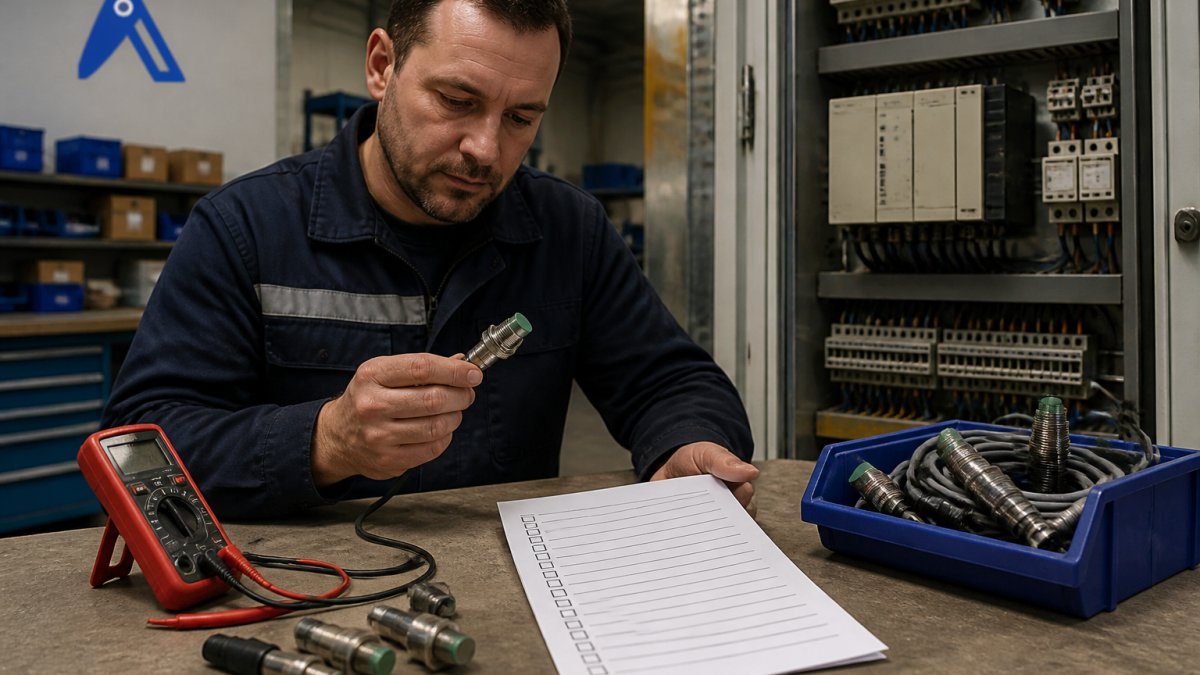
Validation is what separates a good surplus purchase from a costly mistake. Run every legacy sensor through the same checks before it goes into a panel. For a step-by-step method, see how to vet industrial parts suppliers.
- [ ] Ordering code matches the required part exactly
- [ ] Nameplate data readable and consistent with the datasheet
- [ ] Output type confirmed: PNP, NPN, analogue or relay
- [ ] Supply voltage and current draw within the panel's spec
- [ ] Connector type and pinout verified
- [ ] Physical condition checked: housing, lens, cable, thread
- [ ] Date code noted and acceptable for the application
- [ ] Supplier provenance and returns terms confirmed
- [ ] One unit tested in the actual panel before batch purchase
The returns question matters as much as the technical one. Confirm in writing what happens if a unit fails on arrival. A supplier who will not state return terms is telling you something.
Finding Your Next Legacy Sensor Through Automa.Net
The next step is not a search engine. It is a search across verified stock. AutomaSEARCH lets you look up a legacy Schneider sensor by ordering code across the supplier network, so you see real inventory instead of hopeful listings. If the part is not there, the Request Board puts your requirement in front of suppliers who may hold it unlisted.
That is the whole method: identify the code, validate the part, source it from a verified channel, and keep the machine running until modernization genuinely makes sense. The sensor was never the problem. The sourcing was.
Frequently Asked Questions
Can legacy Schneider Electric sensors work with newer control systems?
Many legacy sensors use standard output signals such as 4-20 mA, 0-10 V, or PNP/NPN discrete outputs that modern PLCs and HMIs still accept. The compatibility question is less about the sensor and more about the electrical interface and mounting. Check the sensor's datasheet for output type, supply voltage, and connector pinout, then confirm your input card matches. End-of-service equipment may lose software support and struggle to connect to cloud services, so verify any digital or smart-sensor protocol against your control layer before committing.
How do I identify a discontinued Schneider Electric sensor?
Start with the nameplate: record the exact commercial reference, the date code, and the serial number. Cross-check the reference against the manufacturer's current catalogue and lifecycle documentation. If the reference no longer appears in current catalogues, it is likely discontinued. Photograph the nameplate clearly, because small character differences in the reference can separate a direct replacement from an incompatible variant. AutomaSnap can identify a part from a photo of its nameplate.
What should I verify before buying a surplus Schneider Electric sensor?
Confirm four things: the commercial reference matches your BOM exactly, the condition is stated as new, refurbished, or used with test evidence, the seller provides a warranty or return path, and the provenance is traceable to a legitimate source. Ask for photos of the actual unit and any test report. For safety-relevant sensors, request the original datasheet and check that the unit's date code is consistent with the seller's description. A documented inspection and testing record is the difference between a usable spare and a future downtime event.
When should I replace a legacy sensor instead of sourcing a spare?
Replace rather than source when the sensor is part of a safety function that no longer meets current requirements, when failure rates are climbing and spares are scarce, or when the surrounding control system is being modernised anyway. End-of-service equipment can lose manufacturer support and spare parts availability, so a sensor with no credible supply path is a single point of failure. If a verified surplus or refurbished unit is available and the machine has years of service left, sourcing the spare usually beats a premature retrofit.
The challenge is not finding a sensor. It is finding one you can trust, fast, without a 20-week wait. Automa.Net connects you to verified supplier stock, a broadcast RFQ board and a network built for obsolete and legacy parts. Get started with Automa.Net and turn a discontinued part into a same-week sourcing task.
Find it on Automa.Net →
Other Posts

7 Real Benefits of Sourcing Surplus Industrial Components
Sourcing surplus industrial components cuts costs by 40-70% and keeps legacy machines running. Learn the verification steps and RFQ process.
Read More →
Is the Siemens 6SL3120-1TE23-0AD0 Still Worth Buying?
The 6SL3120-1TE23-0AD0 is a 30 A SINAMICS S120 single motor module. Compare new, refurbished and surplus stock and check compatibility before you buy.
Read More →
SINAMICS S120 Double Motor Module: Which Variant Fits?
Choosing a SINAMICS S120 double motor module? Compare 5 A, 9 A and 18 A variants, part numbers and compatibility before you buy.
Read More →